You want a shop that designs appropriate gain structure, matches impedance, and retains OEM features without noise or DTCs. Seek out certified installers who dampen doors, build solid baffles, and use OEM-grade harnessing, fused distribution, star-grounding, and separated power/signal runs. Give priority to head units with wired/wireless CarPlay/Android Auto, 4-5V preouts, and DSP for time and phase alignment. Anticipate itemized quotes, documented warranties, and RTA-based tuning. If you're located in Murfreesboro, the following sections present trusted options and what to expect.
Main Points
- Choose shops that provide proper system design, clean wiring, and workmanship warranties of at least 12 months.
- Validate experience with your vehicle: CAN-bus integration, steering wheel controls, cameras, and OEM amp retention.
- Obtain itemized quotes dividing hardware, labor, wiring, deadening, DSP tuning, and integration modules.
- Verify technicians use fused distribution, proper gauge wiring, star-grounding, and noise-minimizing cable routing.
- Question them regarding scheduling, parts readiness (harness, dash kit, interfaces), and documented tuning/firmware support after install.
The Importance of Professional Car Audio Installation
Even when you're handy with tools, professional car audio installation provides proper system design, clean integration with factory electronics, and reliable performance. You get correct impedance matching, proper gain structure, and time alignment that maintains stereo imaging. A certified installer evaluates frequency response, prevents ground loops, and routes power and signal cables to reduce noise floor and alternator whine. They interface with A2B, CAN-Bus, or MOST networks using the correct data adapters, so steering wheel controls, OEM chimes, and telematics remain intact.
Experts build mounting baffles, soundproof panels, and optimize DSP for your car's acoustics. They maintain dash aesthetics with exact trim work, factory-quality harnessing, and secure terminations. You sidestep parasitic draws, airbag interference, and warranty problems while optimizing mobile audio performance and system longevity.
Evaluating Your Vehicle's Audio Specifications
Initially, establish your listening objectives and constraints, then map them to your vehicle's platform. Establish whether you prioritize bass response, vocal clarity, or wide soundstage. Examine the cabin: note factory speaker placements, driver sizes, mounting depths, and door materials. Analyze acoustic imaging by verifying tweeter aim, seating positions, and reflective surfaces like glass and hard trim. Calculate available power from the OEM amplifier or source unit, and determine impedance loads to eliminate mismatch.
Examine noise floor: road, tire, and engine frequencies establish damping specifications. Check charging system reserve-alternator output and battery condition-if you intend higher current draw. Determine integration approach: line-level adapters, DSP with summing, or full rewire. Set a realistic budget and timeline corresponding to your goals, installation complexity, and upgrade steps.
Selecting Head Units That Include Bluetooth and Apple CarPlay/Android Auto
When picking a head unit with Bluetooth and Apple CarPlay/Android Auto, you'll need seamless smartphone integration for voice-activated control, app mirroring, and fast connection speeds. Focus on audio quality with powerful preamp outputs, powerful DACs, lossless codec support (AAC/aptX HD), and flexible equalization/time alignment. Validate vehicle compatibility, steering wheel control retention, and fitment (single-DIN/double-DIN), and arrange for proper harnesses, CAN bus interfaces, and microphone/GPS antenna placement.
Effortless Smartphone Integration
While upgrading your vehicle's audio, prioritize a head unit that natively supports Bluetooth streaming and hands-free, plus Apple CarPlay and Android Auto for app-driven control. You'll get voice-driven navigation, messaging, and music with original equipment manufacturer-style ergonomics and minimal driver distraction. Select units featuring both wired and wireless Apple CarPlay and Android Auto, fast boot times, and responsive capacitive touchscreens.
Confirm dual-band Wi‑Fi and high-quality Bluetooth codecs for steady connectivity. Look for Qi wireless charging compatibility, steering wheel control functionality, and rear USB ports with adequate amperage for speedy charging. Configure app shortcuts on the home screen for one-tap access to maps, calls, and playlists. Verify a low-noise microphone placement and clean harness integration. When set up professionally in Murfreesboro, you'll benefit from seamless pairing, reliable updates, and consistent in-dash performance.
Audio Quality Considerations
Fine-tune sound quality by selecting a head unit that treats Bluetooth and CarPlay/Android Auto as signal paths, not afterthoughts. Seek out Bluetooth 5.x with premium codecs (aptX Adaptive, LDAC) and robust antenna design to minimize packet loss. For CarPlay/Android Auto, prioritize low-jitter USB interfaces and high SNR DACs (24-bit, >100 dB). Choose units with premium signal processing: adjustable crossover slopes, time alignment, parametric EQ, and phase control to enhance speaker placement and staging. Make sure preamp outputs deliver 4-5V for superior gain structure and better noise isolation downstream. Examine chassis damping and shielding; quality acoustic materials and layout minimize EMI and vibration-induced artifacts. Verify firmware support for sample-rate integrity and gapless playback to protect dynamic range and imaging.
Installation & Compatibility
Before you buy a head unit, map your vehicle's integration points and verify protocol support. Confirm CAN bus interface needs, steering wheel control retention, and factory amp turn-on requirements. Confirm Bluetooth profiles (A2DP, HFP, AVRCP) and guarantee certified CarPlay/Android Auto over USB or wireless, matching your phone and OS versions.
Validate wiring compatibility with ISO/DIN harnesses, antenna connection adapters, and backup camera signal types. Confirm speaker impedance across stock speakers; discrepancies can engage protection circuits or create audio distortion. If you plan to keep an OEM amp, ensure low-level pre-amplifier outputs and proper voltage. Configure DSP routing, time alignment, and crossover settings within the head unit.
Verify chassis depth, ventilation clearance, and double-DIN fitment. Flash firmware before installation. Run a clean powerand ground run, fuse within 18 inches, and test before reassembly.
Sound Amplifiers, Subwoofers, and Speaker Upgrades
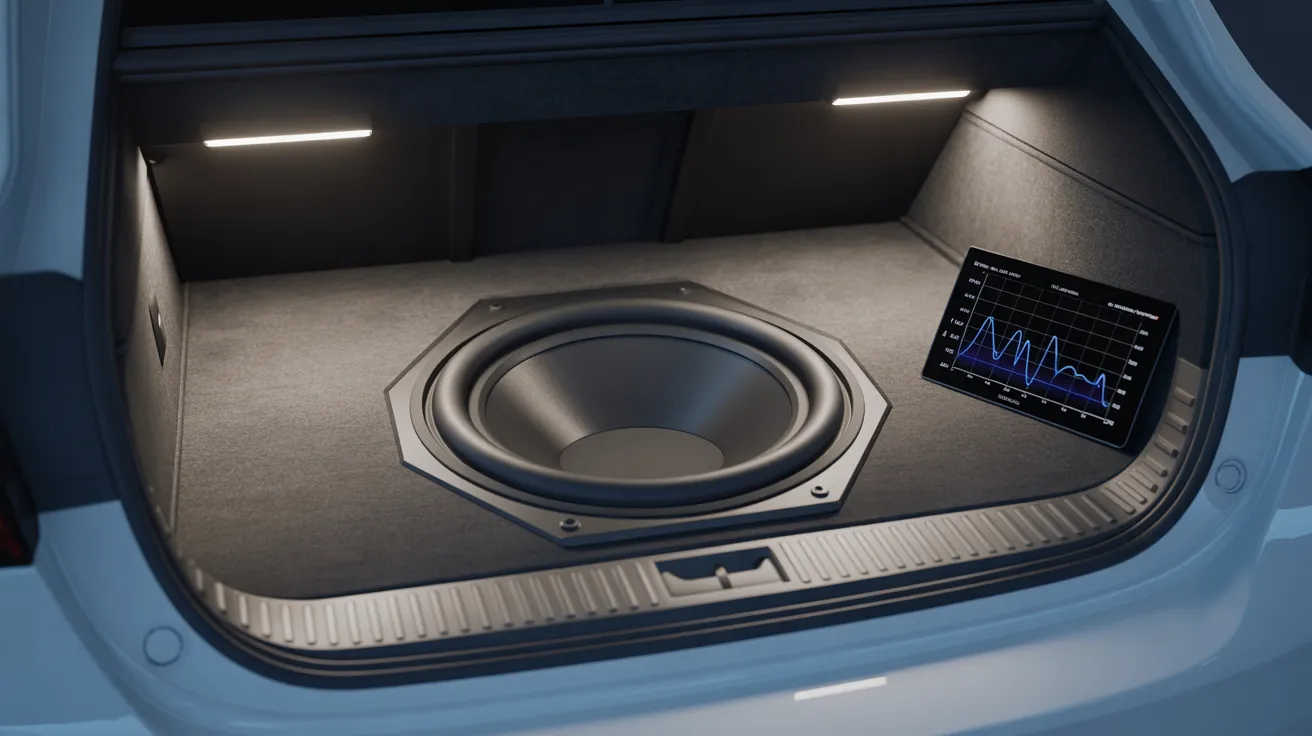
Elevate your system's headroom and clarity with a appropriately matched amplifier, subwoofer, and speaker upgrade configured to your vehicle and listening goals. You'll detect tighter transients, lower distortion, and cleaner dynamics when amplification corresponds to speaker sensitivity and power handling. Pick Class D for optimal multi-channel or mono applications; confirm stable impedance and adequate current delivery. For subs, prioritize enclosure volume, tuning, and bass alignment to achieve linear response and controlled cone motion. Component speakers with quality crossovers boost imaging and off-axis performance; select materials that resist thermal compression and breakup modes. Set gains with an oscilloscope or distortion detector, validate phase coherence between front stage and substage, and apply time alignment for a cohesive soundstage. When done right, upgrades provide powerful, accurate, and reliable performance.
Integration, Wiring, and Preserving Factory Features
You'll need clean, safe wiring with suitable gauge, strain relief, and loomed runs to prevent noise, shorts, and service issues. We connect with OEM data buses using application-specific harnesses, CAN/LIN interfaces, and premium adapters to retain steering wheel controls, warning chimes, and factory amp logic. With the proper modules, you keep features like backup cameras, OEM microphones, and retained accessory power while attaining seamless OEM integration.
Clean, Secure Wiring
While new stereo systems provide better sound and capabilities, the real performance depends on clean, reliable wiring that's appropriately integrated with your vehicle's electrical framework. You'll stop noise, voltage drops, and intermittent problems by routing wires with neat harnessing, using abrasion-resistant loom, and maintaining appropriate strain relief. Terminate with OEM-grade terminals, heat-shrink every joint, and keep covered junctions accessible for servicing without visual clutter.
Terminate power at a fused distribution hub sized for load and cable gauge. Ground to clean, unpainted chassis surface with star washer fasteners and validate resistance via DMM. Isolate low-level signal lines from high-current runs to decrease EMI. Utilize CAN-safe T-taps only where designated, and label each electrical circuit. Lastly, torque battery connections to specified values and check operation with a load test.
Preservation of Factory Features
Since modern vehicles route audio, data, and controls over CAN, LIN, and MOST networks, proper factory feature retention relies on using the right integration modules and harnesses that translate OEM protocols to your aftermarket head unit without breaking diagnostics. You'll validate vehicle topology, identify the gateway, and select an interface that maps steering wheel controls, backup sensors, and HVAC data. Program the module with the correct firmware, then terminate to ISO or aftermarket pinouts using shielded twisted pairs where specified to maintain controls and audio quality.
You'll maintain telematics by routing factory microphones, SOS circuits, and chimes via data-compatible chime modules. Preserve load on amplified systems with load resistors or CAN-enabled amplifiers. Adjust ignition, illumination, and RAP triggers, then validate DTC-free operation with a scan tool.
Effortless OEM Integration
Once factory features are mapped and validated, effortless OEM integration emphasizes clean wiring architecture, proper bus interfacing, and maintaining every OE function. You'll see harnessing executed with OEM-color matching, appropriate gauge selection, and secure terminations using crimp-and-solder techniques or OEM-spec terminals. We interface with CAN/LIN/MOST data networks via data modules, converting commands for steering-wheel control systems, factory amplifiers, and telematics without lag.
We fine-tune signal paths to maintain ANC and adaptive noise systems, stopping phase conflicts or feedback. You'll maintain fader, balance, chimes, and safety prompts through DSP routing and load-appropriate resistive networks. Firmware is modified for smooth syncing with Bluetooth, vehicle profiles, and cluster displays. Power and ground are segregated, noise floors assessed, and grounds star-configured to eradicate alternator whine while maintaining diagnostics and warranty integrity.
Sound Tuning and Calibration for Your Cabin
Prior to when you crank it up, you'll fine-tune your system's response to the cabin's acoustics with methodical tuning and calibration. You'll begin with pink-noise measurement and an RTA to chart frequency response at the driver's seat. Then you'll configure time alignment per speaker, configure phase alignment between woofers, mids, and tweeters, and verify polarity with test tracks. Following this, you'll apply parametric EQ for narrowband issues and shelving filters for tonal balance, prioritizing minimal filter count to maintain headroom.
You'll fine-tune crossover points and slopes to manage overlap and minimize lobing. Implement subwoofer delay to match LF summation with the front stages. Complete with gentle room correction to control cabin gain and flutter echoes. Set up multiple presets for solo, passenger, and top-down scenarios.
Financial Planning: Expenses, Options, and Benefits
Initiate by organizing your budget around system objectives, vehicle platform, and integration complexity. Specify output benchmarks (RMS wattage, signal-to-noise ratio), sources (head unit vs. DSP + OEM retention), and speaker topology (component vs. coaxial). Request budget itemizations that separate hardware, installation labor, integration modules, wiring, deadening, and tuning. In Murfreesboro, entry packages typically package a mechless head unit, basic speakers, and harnessing; mid-tier adds a DSP/amp, components, and deadening; premium includes high-current amplification, substage, active crossover networks, and calibrated tuning.
Use feature comparisons to weigh head-unit DACs, preout voltage, DSP channel count, and app-based tuning. Validate quotes for line-item labor (fabrication hours, calibration), vehicle-specific interfaces (CAN/iDatalink), and warranty terms. Emphasize signal integrity, thermal headroom, and future expandability to maximize long-term value.
Installation Schedule and What to Anticipate on Appointment Day
The budget and scope you've set determine expectations about how long the setup process will take and what takes place the day you arrive. Expect us to review your appointment checklist, confirm vehicle VIN, trims, and existing head unit, then verify parts: dash kit, harness, CAN interface, antenna adapter, and amp integration modules. For arrival logistics, place your car in the specified bay, clear out valuable items, and leave the fuel door accessible if a battery support unit is used.
Common installation times: basic head unit swap, 60-90 minutes; head unit with steering wheel control integration and backup cam, 2-3 hours; DSP/amp with sub wiring and Big 3 upgrade, 4-6 hours. We conduct initial testing, battery float, panel removal with trim tools, impedance verification, signal routing, coding/firmware updates, reassembly, and a final functionality test-drive.
Warranty Coverage, Maintenance, and Growth Potential
You'll want clarity on shop and manufacturer warranties-labor terms, parts coverage, and transferability-so you understand precisely what's protected post-install. We'll outline aftercare procedures including firmware updates, tuning checks, and connector inspections to maintain system performance and preserve warranty validity. We'll also map upgrade paths and add-ons-DSP integration, multi-amp expansion, substage upgrades, and OEM-retention modules-so you more info can scale your system without rework.
Manufacturer and Workshop Warranties
Even the finest head units and amplifiers can fail, so it makes sense to understand how manufacturer and shop warranties function in tandem, plus what they mean for post-installation service and upgrade potential. A manufacturer warranty typically covers defects in materials or firmware for a defined term (typically 1-3 years), subject to proof of purchase and compliant setup. It won't cover incorrect wiring, thermal abuse, or water intrusion. A shop warranty covers installation quality-terminations, solder joints, fuse sizing, impedance matching, and integration with OEM harnesses-generally 12 months, sometimes lifetime on labor.
You should get documentation listing which parts are included, labor rates, RMA procedures, turnaround times, and whether diagnosis fees are waived. Verify transferability, parts availability, and authorized-service status. When both the manufacturer warranty and shop warranty are valid, you lower downtime and repair costs paid out-of-pocket.
Upgrade Paths and Add-Ons
Though your current install should sound great from the start, smart planning establishes a clean upgrade path that keeps warranties intact and limits rework. Consider modular components, ISO harnesses, and T-harness integration to preserve factory wiring and preserve OEM features. Choose head units with extra preouts, DSP capability, and high-voltage RCA to support future amplifiers and subwoofer stages.
Integrate Bluetooth adapters, backup cameras, and LED lighting using fused distribution blocks and CAN-safe controllers. Select amps with pass-through RCAs, selectable crossovers, and sufficient headroom. Implement load resistors or interfaces to prevent CAN errors and airbag lights.
Document serial numbers, firmware, and wiring diagrams for warranty claims. Schedule regular tuning, firmware updates, and battery and ground checks. Organize alternator, Big 3 upgrades, and deadening prior to expanding power demands.
How to Locate Reliable Car Stereo Installers in Murfreesboro
Commence by assessing installers through numerous reliable sources: MECP-certified shops available on the Mobile Electronics Association directory, local dealerships' approved installer lists, and high-volume independent retailers with dedicated installation bays. Compare reviews across Google and Yelp, but prioritize evidence of proficiency: CAN bus integration, OEM retention modules, DSP tuning, and fiber-optic MOST interfaces. Ask about scope-of-work documentation, panel removal protocols, torque specs, and use of non-marring tools.
Call out Independent installers and Mobile specialists who deliver in-bay calibration, RTA measurements, and vehicle-specific harnessing. Confirm liability insurance, warranty terms (parts and labor), and firmware update support for head units and amplifiers. Ask for before and after measurements, photos of loom routing, and fuse placement. Finally, verify turnaround time, loaner policies, and post-install support, including retuning sessions after speaker break-in.
Frequently Asked Questions
Will Murfreesboro Installation Professionals Provide Mobile, On-Site Stereo Installation Services?
Indeed, many area shops provide this. You can locate mobile installers who arrive at your residence or workplace, equipped for on site wiring, head unit integration, and CAN bus-safe connections. They take care of power distribution, fuse protection, speaker impedance matching, and OEM interface retention. You schedule, they pre-verify your vehicle, arrive with harnesses, dash kits, and test gear, then verify, program, and calibrate. Expect proper loom routing, secure grounds, firmware updates, and quality, warranty-backed workmanship.
Can Evening or Weekend Installation Appointments Be Scheduled?
Yes, you can. The majority of shops offer flexible scheduling including evenings and weekends to match your schedule. When booking, indicate your desired appointment slot and vehicle specifications such as make, model, and trim to assign the appropriate technician and harness kit. Request information on lead times, off-peak pricing, and any mobile service options. Confirm workspace availability, power requirements, and firmware update needs for audio head units, CAN bus systems, and amplifiers. You'll be provided with a confirmation with estimated completion time and work details.
Do You Need to Consider Local Noise Ordinances During System Demos?
Indeed. You need to comply with local noise ordinances while conducting system demos. Control speaker volume to keep below posted decibel limits, most importantly in residential zones and after quiet hours. Pick a compliant demo location—commercial zones, controlled bays, or sound-treated spaces-to minimize nuisance and citations. Use an SPL meter to validate dB levels, keep bass transients in check, and limit demo duration. If mobile, idle in neutral sites and avoid running sub-bass sweeps near homes, schools, or hospitals.
Are Loaner Vehicles Provided by Shops During Longer Installs?
Yes-certain facilities do, though it depends on their policy and liability coverage. You'll notice certain shops offering restricted loaner programs or rental arrangements, while different facilities supply a customer shuttle within a service radius. Ask about proof-of-coverage requirements, mileage caps, and fuel policies. For extended projects-DSP calibration, custom fabrication, or complete rewiring-validate completion timeframes, availability windows, and release of liability documents. If loaner vehicles don't exist, request discounted rental rates or rideshare credits written into your repair order.
What Payment Plans or Financing Options Are Available Locally?
You'll usually discover in-house funding, external lenders like Synchrony, and "buy now, pay later" options. Facilities feature Deferred Payment plans with 90‑day same-as-cash promos, zero‑down approvals, and graduated interest plans based on credit profile. You can separate parts, service, and tuning into fixed monthly installments, establish autopay, and make early payments without fees. Ask about setup fees, post-promotional APR, purchase minimums, and soft inquiry prequalification to avoid hard credit checks before making a commitment.
Final Thoughts
At the end of the day, you're validating a straightforward theory: exactness delivers performance. When you spec the right head unit, match RMS power, configure crossovers, sound-treat doors, and integrate via CAN-bus without triggering DTCs, you hear the proof. Dependable installs aren't accidents-they're systematic approach: correct gauge OFC, safeguarded distribution, clean grounds, tuned DSP, and validated phase. You preserve OEM features, preserve warranty, and achieve scalability. Pick proven Murfreesboro specialists, and your system won't simply perform-it's going to deliver, image, and stand the test of time.